Posts

Nicholas II of Russia - The Last Tsar of the Russian Empire

Image
Nicholas II of Russia was the last emperor (Tsar) of the Russian Empire. His dominion included the whole Russian Empire,  Finland,  and Poland. He remained the Tsar of Russia from 1894 to 1917 before his abdication.   During his reign, the Russian Empire declined internally and externally. Russian army and navy suffered one of the most humiliating defeats in Russian history against Japan during the  Russo-Japanese War (1904-05). The position of Russia was also miserable during World War 1 (1914-18).  These defeats and other matters affected the economic conditions of the empire negatively. Therefore, Nicholas II initially had to replace the absolute monarchy with a constitutional monarchy after the  Russian Revolution of 1905 . Later, the Russian Revolution of 1917  ended his reign and replaced the monarchy with  communist rule. On 17 th July 1918, Nicholas II was killed along with his whole family by the new soviet rulers of ...

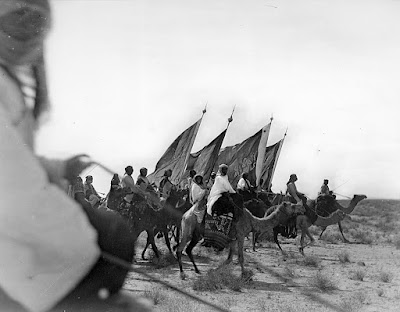
Abdul Aziz Al Saud - Founder of Modern Saudi Arabia

Image
Abd-ul-Aziz bin Abdul Rahman Al Saud (commonly known as Ibn-e-Saud ) was the founder and first king of Modern Saudi Arabia,  the 3 rd Saudi State. He re-conquered Riyadh (the home city of his family) in 1902 from the  Al Rashid family. This event was the base of the formation of modern Saudi Arabia, and  he later completed the establishment of Saudi Arabia in 1932. Early Life Abdul Aziz was born in Riyadh on 15 th January 1876. His father,  Abdul Rahman bin Faisal,  was the last ruler of the  Second Saudi State (1818-1891). The  Al Rashid family (the opponents of the  Al Saud family in Najd)  captured Riyadh  in 1890 and forced the Saudis to take refuge in the southern desert of Arabia. Later, Abdul Aziz and his family stayed in Qatar and Bahrain for some time. Later, they settled in  Kuwait and remained for around a decade. At the start of their exile, Ibn-e-Saud was just 15 years old.   Conquest of Najd ...

Formation of Modern Saudi Arabia - History and Significance

Image
Modern-day Saudi Arabia is a vast country, established in 1932 after the unification of the majority areas of the Arabian peninsular under the rule of the al-Saud family. Modern Saudi Arabia is also the Third Saudi State because Saudis established two previous states in the 18 th and 19 th centuries. Saudis gained influence through the Salafi ideology of Islam, which is quite similar to the  Puritan faith of the Christian religion. Brief History Muhammad bin Abdul Wahhab (1703-1792) was a famous preacher and religious scholar of Najd (central Arabia). The basis of his teachings is on strict Islamic beliefs, where the emphasis is on the propagation of T awheed (monotheism) and rejection of shirk (polytheism), bidah (innovations in Islam), and supplication from anyone except Allah.  Ibn-e-Saud's family accepted h is religious ideology, and later both families allied. Under an agreement, Ibn Abdul Wahhab accepted the political supremacy of the al-Saud family in their c...

Juan Ponce de Leon - The First European to Reach the USA

Image
Juan Ponce de Leon was a Spanish explorer and nobleman who also became the first Governor of Puerto Rico under the Spanish Empire. He was the first European to reach Florida (now in the USA), which was also the initial exploration of the mainland USA (area south of Canada and north of Mexico). Early Life Juan Ponce was born in 1474 in the now-Spanish province of Valladolid. During his youth, he took part in the fights against the Muslim rule of Granada for the re-conquest of Spain.  Juan Ponce was the first governor of Puerto Rico Arrival in the Americas After the re-conquest of Spain in 1492, the chance of a military expedition in Spain ended for Juan Ponce. Therefore, he decided to go abroad to test his luck. He joined Christopher Columbus for his second voyage to the New World in 1493, along with 1200 men. A fter visiting several islands, their fleet reached the final destination of the Caribbean island of Hispaniola (now the  Dominican Republic and ...

Ancient Greek Philosophers - Their Role in Modern Philosophy

Ancient Greek Philosophy started in the 6 th Century BC and continued till the Ancient Greek period, which later vastly affected the Hellenistic period, Classical Islamic Philosophy, and European Renaissance. There are two main periods of Greek Philosophy. The first is pre-Socratic Philosophy,  while the other is Classical Greek Philosophy. Famous Greek Philosophers and their philosophies are mentioned below according to these two periods. Pre-Socratic Philosophers Pre-Socratic Philosophy is the Greek Philosophy before the famous Greek philosopher Socrates. These philosophers were the first ones who asked rational questions about things like the creation of this universe and the reality of everything while refusing the previous mythological definitions. They were also the pioneers of scientific and mathematical study by introducing paradoxes and problems.  According to Aristotle,   Thales (624-546 BC) was the first Greek philosopher. He was born in Mile...

Alexander the Great - The Greatest Greek Ruler

Alexander III of Macedon was the king of Ancient Greece. Due to his great successes and occupation of a large empire, he is famous as Alexander the Great. During his 13 years of reign, he conquered Egypt, Persia, and a large part of Asia and North Africa. He is known as one of the greatest military generals in human history. Early Life Alexander was born on 20 th July 356 BC in Pella (then the capital of the Macedonian kingdom and now in Greece). His father,  Philip II of Macedon ,  united all parts of Greece under a single leadership. In his childhood, Alexander learned the traits of the noble youth of Macedon, including reading, horse-riding, hunting, and fighting. At 13, Philip appointed the great scholar Aristotle as his tutor. Alexander learned morals, philosophy, medicine, logic, religion, etc. from Aristotle. His later victories were positively affected by the teachings of Aristotle. Alexander’s victories started at 16 when he crushed the rebellion in Thrac...

Ancient Rome - From Rise to Divide

Ancient Rome was one of the earliest civilizations in Europe, centered around the Italian Peninsula. It rose from a small settlement along the Tiber River, and grew into one of history’s most powerful empires  within a few centuries. However, the significance of the Roman Empire diminished after its   division into two parts in the 4 th Century AD. Alongside  Ancient Greece, the civilization of Ancient Rome shaped the  law, government, architecture, language, and culture in ways still felt today. T he se two ancient civilizations largely influenced the views of the  Renaissance in Europe during the 14 th Century. There are four eras of this ancient civilization: the Roman Kingdom, the Roman Republic, the Roman Empire, and the division of the Roman Empire. Roman Kingdom According to legend,  twin brothers Romulus and Remus  founded the city of Rome in 753 BCE. Later, Romulus became the first king of the Roman Kingdom. Seven mo...